
Alternative Routes for Iran Bitumen Exports: The Role of Road and Rail Transportation
International bitumen trade depends not only on production capacity but also on efficient transportation and access to export markets. For Iran, road and railway networks offer important alternatives for reaching neighboring countries and landlocked markets, particularly in Central Asia and Afghanistan.
Iran bitumen exports can benefit from alternative road, rail and multimodal transportation routes, allowing exporters and buyers to explore different logistics arrangements based on destination, shipment volume, product specifications and delivery requirements.
1. Road Transportation: A Flexible Export Route
Road transportation is one of the most flexible options for delivering Iranian bitumen to neighboring markets. Its main advantage is the ability to connect suppliers directly with border crossings, warehouses and customers.
Important land-based destinations include:
- Turkey: An established land connection to regional and European markets.
- Iraq: A neighboring market accessible through multiple land border crossings.
- Afghanistan: An important destination through eastern border connections.
- Turkmenistan: A potential gateway for reaching Central Asian markets.
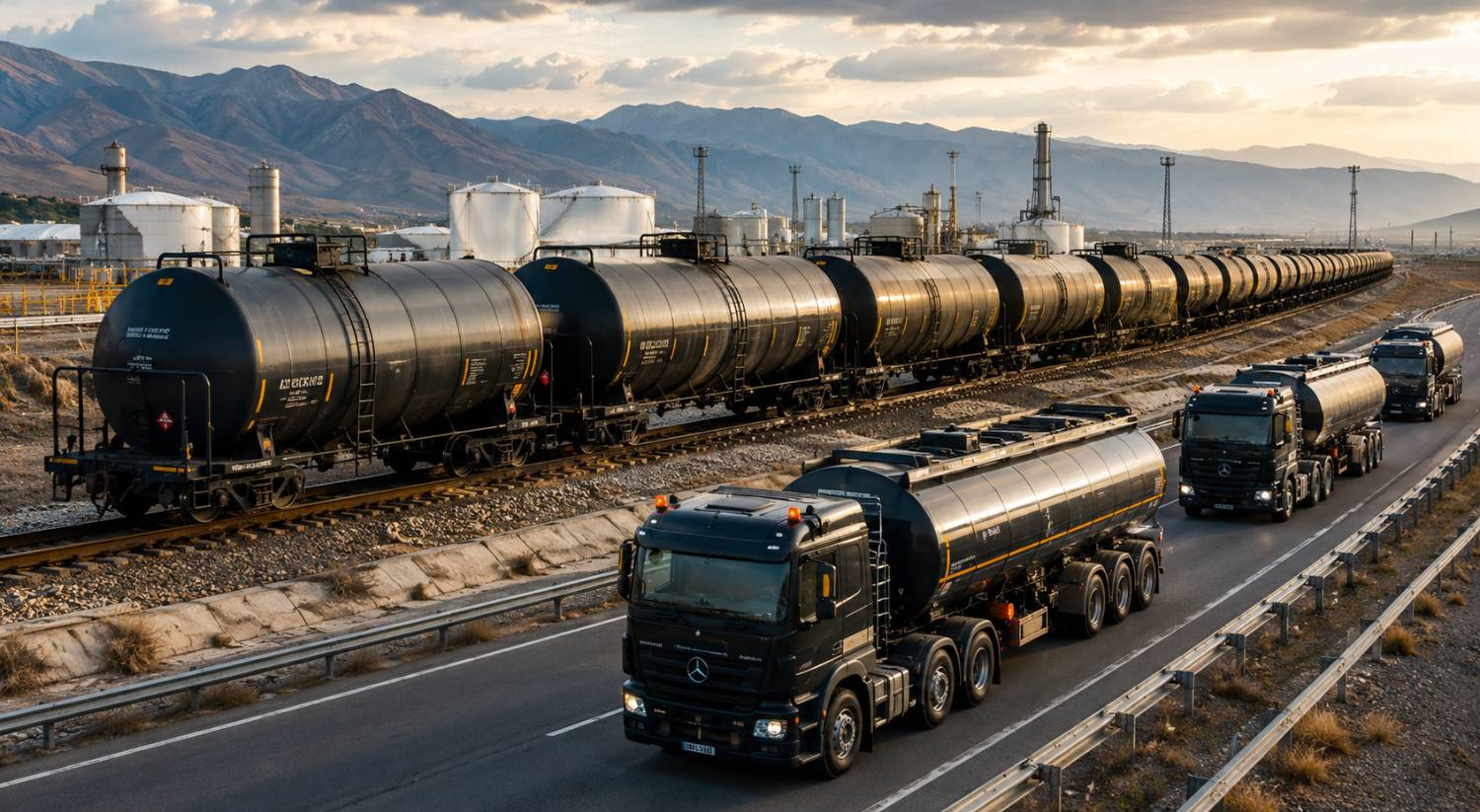
Bitumen can be transported in insulated and heated road tankers or in packaged forms such as steel drums and jumbo bags. The appropriate method depends on the product grade, shipment size, available handling facilities and buyer requirements.
2. Railway Transportation: Expanding Regional Connectivity
Rail transportation provides another opportunity for developing Iran’s export logistics, particularly for larger shipments and destinations connected to international railway networks.
Several railway connections deserve attention:
Khaf–Herat Railway: This connection links northeastern Iran with western Afghanistan and provides an operational freight route between the two countries. It offers an alternative for commercial shipments destined for Afghanistan and potentially wider regional markets.
Iran–Turkmenistan Railway Connection: Railway connections through Turkmenistan provide access to Central Asian transport networks, including potential onward routes toward Uzbekistan and Kazakhstan. Regional cooperation has also focused on developing the Uzbekistan–Turkmenistan–Iran transport corridor.
These connections can expand logistics options, although actual shipment feasibility depends on railway services, border procedures, wagon availability and cargo-handling facilities.
3. Why Combined Road and Rail Transportation Matters
Using road and rail transportation together can create more flexible logistics solutions for international bitumen trade.
For example, railway freight may be considered for longer inland distances, while trucks can transport products between loading facilities, railway terminals, border points and final destinations.
The most suitable arrangement depends on:
- Shipment volume and delivery destination.
- Bulk or packaged bitumen requirements.
- Availability of suitable tankers, wagons and containers.
- Heating, storage and unloading facilities.
- Customs procedures and transit documentation.
Because bitumen requires appropriate temperature and handling conditions, transportation equipment must be selected according to the product’s specifications and delivery requirements.
4. How BITUMAX Helps Buyers Explore Suitable Export Routes
Choosing the right transportation route is just as important as selecting the right bitumen supplier. International buyers need to consider not only the product but also the most suitable logistics arrangement for their destination market.
BITUMAX can work with buyers to evaluate available transportation alternatives and identify a suitable export route based on their specific requirements. By considering road, rail and multimodal options, shipment volume, destination, product grade and packaging preferences, BITUMAX aims to help customers make more informed sourcing and logistics decisions.
Whether you are importing bitumen for road construction, infrastructure projects or distribution, you can contact BITUMAX to discuss your purchasing requirements, explore suitable transportation options and request a quotation.
Conclusion
Alternative road and railway routes offer valuable opportunities for expanding Iran bitumen exports into neighboring and regional markets. Road transportation provides flexibility, while railway connections create additional possibilities for larger shipments and cross-border trade.
For international buyers, selecting the right supplier and evaluating suitable logistics options are essential steps toward efficient procurement. Working with a knowledgeable commercial partner such as BITUMAX can help buyers explore available supply and transportation alternatives for their target markets.
Frequently Asked Questions
1. What are the main alternative routes for Iran bitumen exports?
Road connections through Turkey, Iraq, Afghanistan and Turkmenistan, together with railway routes through Afghanistan and Turkmenistan, offer alternative regional transportation options.
2. Can Iranian bitumen be transported by rail?
Yes. Depending on the product and available infrastructure, bitumen can be transported using suitable rail tank wagons or packaged cargo arrangements.
3. Can BITUMAX help buyers find a suitable transportation route?
BITUMAX can work with buyers to evaluate available road, rail and multimodal options based on destination, shipment volume, product specifications and packaging requirements.